
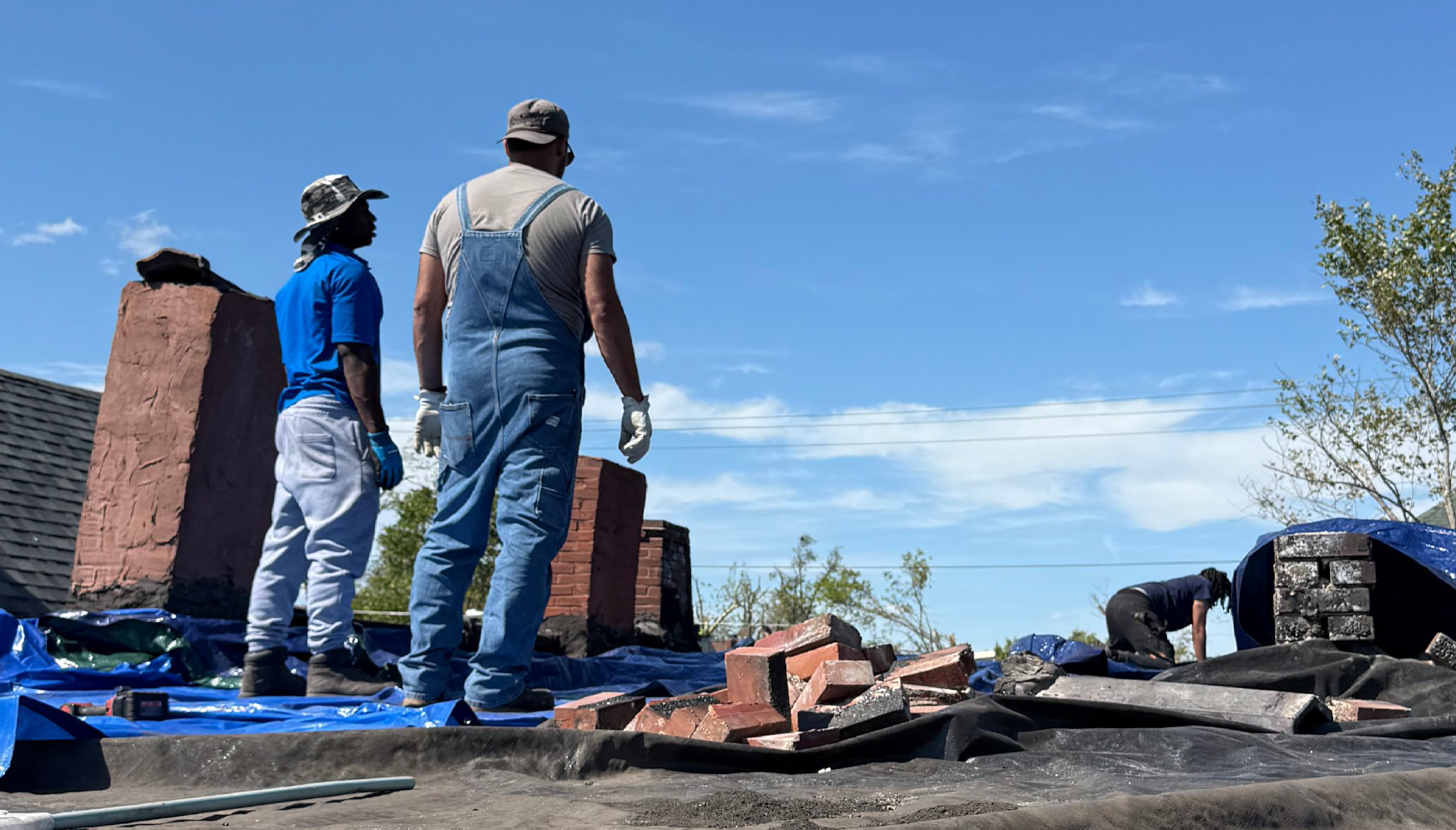
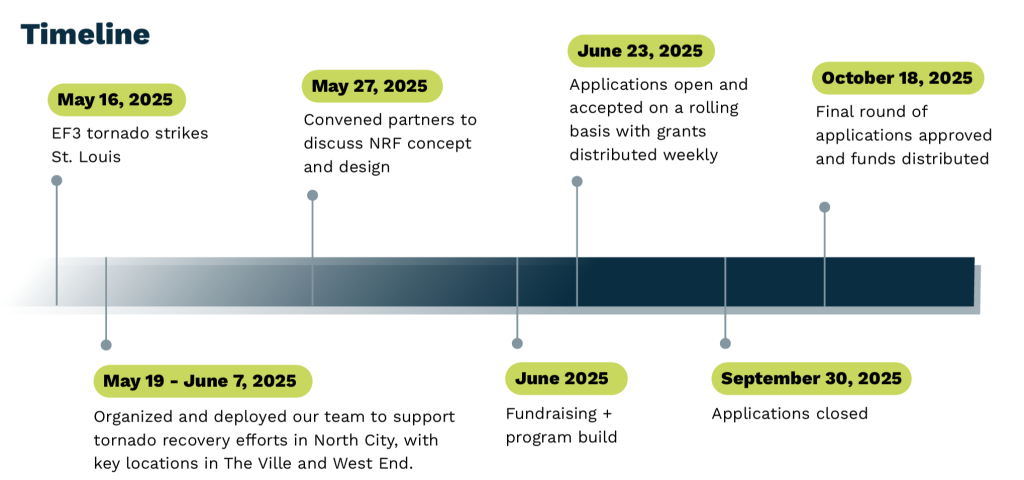
On May 16, 2025, an EF3 tornado cut a 23-mile path through St. Louis City and County. The ensuing devastation left thousands of residents displaced, destroying more than 5,000 homes and businesses. The brunt of the destruction hit 19 North St. Louis City neighborhoods — Legacy Black communities from which investment and opportunity have historically been withheld. In the weeks that followed, federal, state, and municipal systems slowly mobilized — but, as is often the case after large-scale disasters, a gap emerged between the impact and the relief.
Direct Cash Assistance, Designed for Urgency, Flexibility, and Agency
Launched by Invest STL in partnership with community organizations and funders, the Northside Resilience Fund (NRF) provided direct, flexible cash assistance to households in North St. Louis, our neighbors most severely impacted by the tornado. The goal was not to replace longterm recovery resources, but to meet urgent, immediate needs as residents waited for insurance, the Federal Emergency Management Agency (FEMA), and other relief to become available. This required building a program — intake, review, verification, distribution, and support — in real time. This work was based on past experiences launching direct cash assistance initiatives, including a COVID-19 aid fund, Rooted: Cultivating Black Wealth in Place, and Small Dollars Action Fund.
In just two weeks, we and our partners created and raised enough initial funding to launch a direct cash assistance program. On a rolling basis over the course of four months, 1,378 North St. Louis households received $3,000 grants to begin their recovery on their own terms — for housing, transportation, utilities, repairs, medical needs, and much more to create a path toward recovery.
This Powerbook Documents What It Took to Do That Work.
This Powerbook captures how NRF came together, how decisions were made under pressure, what worked well, what did not, and what we could — as well as the broader region could — do differently next time. It draws directly from listening sessions with the people who made NRF possible: project leads, volunteers, phone helpline members, and application review staff who shouldered the work daily.
NRF was created to meet urgent needs quickly — and to trust residents to decide what came next.
NRF was not perfect. No rapid-response program ever is. But it demonstrated what is possible when community-based organizations are trusted, resourced, and equipped to act quickly, with care for neighbors and their dignity.
The speed and scale of this work exposed both strengths and strains — lessons that inform how we, and our region, can respond more quickly and equitably with direct cash assistance during future disasters and crises.
Preparing for What Comes Next
Extreme weather does not affect all communities in the same way. Predominantly Black neighborhoods are often hit hardest, as climate-related disasters compound the injustices of historic housing discrimination and systemic racism. (1) Research has shown that formerly redlined neighborhoods experience greater vulnerability to extreme weather than non-redlined areas. We see this nationwide, as Black neighborhoods denied investment are hotter and more flood-prone than wealthier, whiter neighborhoods. (2)
We are dedicated to untethering the past from what’s possible in the future by refusing to accept the restraints of generations of systemic anti-Black racism. As extreme weather events become more frequent and severe, the lessons from NRF are not just retrospective. They are preparatory. This Powerbook is intended to serve as a practical resource for our Invest STL team, community organizations, funders, and government leaders working to ensure the next direct cash assistance response is faster, more equitable, and better coordinated.
1: The Effects of Historical Housing Policies on Resident Exposure to Intra-Urban Heat: A Study of 108 US Urban Areas,” published in Climate (2020).
2: “A Racist Past, a Flooded Future: Formerly Redlined Areas Have $107 Billion Worth of Homes Facing High Flood Risk—25% More Than Non-Redlined Areas,” Redfin News (2021)
